

Reported by: Ijeoma G | Edited by: Oravbiere Osayomore Promise.
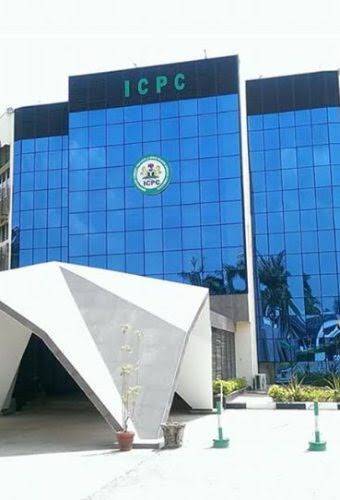
The Independent Corrupt Practices and Other Related Offences Commission has dropped a bombshell that has sent shockwaves through Nigeria's public service, revealing that one government official enrolled 14 members of his family on the government payroll as ghost workers, while another collected 13 salaries through fraudulent payroll manipulations. The revelations, made public on Thursday, August 13, 2026, by ICPC Chairman Musa Aliyu (SAN), have exposed a deep-seated culture of impunity within the country's public service, where the manipulation of payroll systems has become a lucrative enterprise for corrupt officials.
Aliyu, who was delivering the keynote address at the 2026 Economic Confidential Lecture and National Spokespersons Award organised by Image Merchants Promotions Limited in Abuja, did not mince words in describing the scale of the fraud. "We discovered that one person enrolled 14 members of his family. He lived in a religious hotel, a hotel at the public office, receiving salaries," he declared. The ICPC chairman's revelation painted a picture of a public servant who had turned the government payroll into a family business, drawing salaries for relatives who were nowhere near any government office. "Another person enrolled his wife, his daughter, his son, and others and was receiving 13 salaries," Aliyu added.
The disclosures came after a gruelling year-long investigation into suspected ghost workers and payroll manipulation across government institutions. Aliyu explained that the commission had identified about 900 suspected ghost workers and published their names, challenging them to prove that they were genuine employees. "We spent one year, one single year, on ghost workers," he said, underlining the depth of the investigation. The ICPC chairman also detailed the sophisticated methods used to perpetrate the fraud, noting that in some cases, the names and email addresses of fictitious employees appeared on official payrolls, but the bank account details linked to those entries belonged to entirely different individuals. "When they insert their names, you will see their name in the payroll. You will see their email. But when you check the account number, you will see the name of the person. So, that is how these things have been done," he explained.
The implications of the ghost worker scheme extend far beyond the immediate theft of salaries. Aliyu warned that each fraudulent payroll entry could generate ghost pensions, ghost mortgage benefits, ghost housing fund contributions, and ghost health insurance claims, creating a cascade of financial losses for the government. "Because, you know, once there is a ghost worker, there is ghost pension, there is ghost mortgage, there is ghost housing fund, there is ghost health insurance," he said. The ICPC chairman also disclosed that the commission recovered more than N24 billion in suspected ghost workers' pension funds in 2024 alone, a figure that underscores the staggering scale of the problem. "In 2024, we recovered over N24 billion ghost workers pension," Aliyu stated.
The revelations have raised serious questions about the integrity of Nigeria's public service and the effectiveness of the Integrated Personnel and Payroll Information System, which was designed to eliminate ghost workers and streamline payroll management. The fact that officials could enrol entire families and collect multiple salaries suggests that the system remains vulnerable to manipulation. Aliyu's disclosure also highlighted the human cost of the fraud, as the illicitly collected funds could have been used to provide essential services, improve infrastructure, or pay genuine workers who are struggling to make ends meet.
The ICPC chairman stressed that the commission was increasingly focusing on preventing corruption and ensuring that government projects were properly executed, rather than relying solely on criminal prosecution. "It is better for us to do that than to engage in filing criminal charges. How many charges can we file?" he asked. Aliyu said the commission had adopted cross-agency collaboration and other preventive measures to tackle corruption and recover government resources. He called for greater use of data and technology in combating corruption, noting that effective communication and access to reliable information were essential to building public confidence in anti-corruption efforts.
The disclosure adds a new dimension to the ICPC's ongoing efforts to dismantle payroll fraud and recover public funds diverted through ghost-worker arrangements. The commission has been at the forefront of the fight against corruption in Nigeria, and the latest revelations are likely to intensify public scrutiny of government payrolls. Aliyu's call for preventive measures and the use of technology reflects a growing recognition that prosecution alone is not enough to stem the tide of corruption. He emphasised that the ultimate objective was to ensure that Nigerians derived value from government expenditure. "We now secured income of about 900 ghost workers, which we published their names in papers," he said, challenging the affected individuals to prove their employment status.
The case of the official who enrolled 14 family members and another who collected 13 salaries is not an isolated incident. In July 2026, the ICPC reported that it had uncovered 908 ghost workers across ministries, departments, and agencies, with police officers topping the list. Investigations revealed that some senior public officials allegedly inserted the names of relatives and associates into government payrolls and diverted the salaries for personal use. One suspect was found to have enrolled his wife, son, and mother-in-law as government workers while also collecting the salaries of 12 other fictitious employees. The pattern is clear: the manipulation of payroll systems has become a well-established practice among corrupt public officials.
The revelations come at a time when the Nigerian government is grappling with a severe fiscal crisis, with dwindling revenues and mounting debt obligations. The diversion of public funds through ghost workers and payroll fraud represents a significant drain on the nation's resources. The ICPC's investigation and the recovery of over N24 billion in ghost pension funds are a step in the right direction, but the scale of the problem suggests that much more needs to be done. Aliyu's call for preventive measures and the use of technology is a recognition that the current system is failing to protect public funds.
For the thousands of genuine public servants who work tirelessly to serve the nation, the revelation that their colleagues are defrauding the system is a bitter pill to swallow. The ghost worker scandal erodes public trust in government institutions and undermines the morale of honest workers. As the ICPC continues its investigation, the public will be watching closely to see whether the perpetrators are brought to justice and whether the government will implement the necessary reforms to prevent a recurrence. The message from the ICPC chairman is clear: the era of impunity for payroll fraud is over, and the commission is determined to ensure that public funds are used for the benefit of all Nigerians.
📩 Stone Reporters News | 🌍 stonereportersnews.com
✉️ info@stonereportersnews.com | 📘 Facebook: Stone Reporters News | 🐦 X (Twitter): @StoneReportNew | 📸 Instagram: @stonereportersnews
Add comment
Comments