

Published by Oravbiere Osayomore Promise.
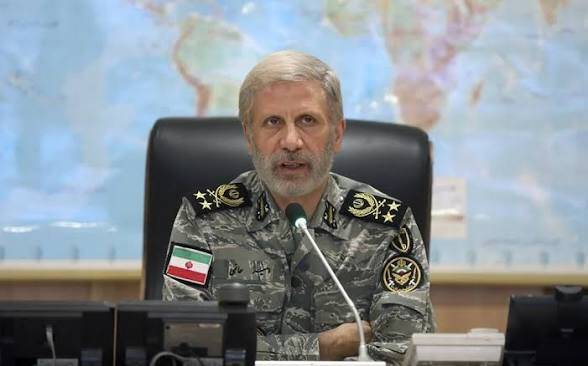
Iran's military leadership has escalated its war of words against the United States, announcing a $30,000 bounty for the killing or capture of any American service member, with a double reward for Iranian women who succeed in such an action. The announcement, made on Sunday, August 16, 2026, by Iranian Army Commander-in-Chief Major General Amir Hatami, marks a significant escalation in Tehran's rhetoric against Washington, even as its economy buckles under the weight of war and sanctions.
In a statement carried by Iranian state media and confirmed by multiple international outlets, Hatami declared that the reward would be granted to any Iranian soldier from "the Iranian people." "Given the large volume of requests to participate in the financial jihad, a plan was prepared according to which, for every person who kills or captures and hands over an American aggressor force, the Islamic Republic of Iran Army... will receive a gift equivalent to $30,000 or 5 billion Tomans," Hatami said. "Zealous Iranian women who succeed in this action will also receive double the reward," he added.
The army chief also offered additional incentives, stating that the weapon of anyone who kills an American soldier will be "purchased at double the price" and that the individual will receive a new weapon. The original weapon would then be placed in a museum, a move that frames the bounty as a matter of national pride and propaganda. Hatami's rhetoric extended beyond the financial offer, as he issued a stark warning to the United States regarding its military presence in the region. "Everyone should know that in no way can the American bases return to their previous status, and Iran will never allow centers to be established in our neighborhood that aim to threaten Islamic Iran," he declared, threatening US bases in the Middle East.
The bounty offer comes against the backdrop of a devastating war between Iran and the United States that began on February 28, 2026, when the US, joined by Israel, attacked Iran. The conflict saw intense fighting centered in southern Iran and around the strategic Strait of Hormuz. A ceasefire was brokered in April after nearly 40 days of fighting, followed by a June framework for peace talks that later collapsed. Since then, both sides have traded fire sporadically. The timing of the bounty announcement appears calculated to exploit the ongoing tensions. It also coincides with a period of severe economic strain for Tehran. President Masoud Pezeshkian has publicly acknowledged the worsening economic situation, citing falling oil revenues and extensive damage to industrial facilities caused by the war. "Our problems have multiplied many times over, while our revenues have also declined," Pezeshkian said. The offer of a $30,000 bounty, equivalent to approximately 5 billion tomans, is a significant sum in a country grappling with inflation and a collapsing currency, raising questions about how the reward will be funded.
Analysts have noted that Hatami's announcement appears to be a direct response to the US Rewards for Justice program, which has offered up to $10 billion for crucial information regarding Iran's Supreme Leader and senior Islamic Revolutionary Guard Corps officials. By placing a bounty on American soldiers, Iran is attempting to project strength and retaliate symbolically against Washington's intelligence and financial warfare. However, critics view the move as a sign of desperation. Iran's economy is in tatters, and the government's ability to finance such a reward is questionable. The offer also raises legal and ethical questions, as it arguably constitutes an incitement to commit war crimes under international humanitarian law, which prohibits the targeting of combatants who are hors de combat or the offering of rewards for their killing.
The US has not yet issued an official response to the bounty offer, but the announcement is likely to further strain relations between the two nations. With peace talks stalled and tensions simmering, Hatami's words serve as a stark reminder of the volatility of the region. "The delusional US president is trying hard to create a winning image of himself. But today, few people in the world take him seriously," Hatami declared. "The image of someone who hides in a food truck out of fear... is the image of a big loser."
As the world watches, the question remains: is this a genuine threat, or a rhetorical flourish designed to rally a war-weary population against a common enemy? The answer may determine whether the region slides back into full-scale conflict or whether diplomatic channels can be reopened before the bounty on American heads becomes a reality.
📩 Stone Reporters News | 🌍 stonereportersnews.com
✉️ info@stonereportersnews.com | 📘 Facebook: Stone Reporters News | 🐦 X (Twitter): @StoneReportNew | 📸 Instagram: @stonereportersnews
Add comment
Comments