

Reported by: Ijeoma G | Edited by: Oravbiere Osayomore Promise.
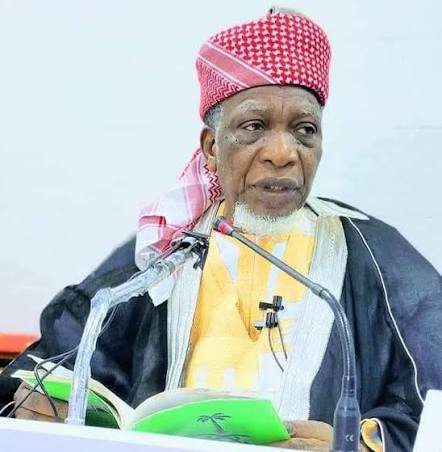
A prominent Islamic scholar and member of the leadership of the Jama’atu Izalatil Bid’ah Wa Iqamatis Sunnah (JIBWIS), Malam Abdulrahaman Nuhu Almaliky, has ignited a fresh firestorm of controversy with his unapologetic defence of the Muslim-Muslim presidential ticket of President Bola Ahmed Tinubu and Vice President Kashim Shettima. In a sermon that has since gone viral on social media, the Jos-based cleric declared that he would rather endure extreme hardship under a Muslim leader than enjoy material comfort under a non-Muslim leader. His comments, made against the backdrop of a similar inflammatory sermon by his ally, Sheikh Sani Yahaya Jingir, have drawn widespread condemnation from Christian leaders and civil society groups, while reigniting the contentious debate over the role of religion in Nigeria’s political landscape ahead of the 2027 general elections.
Almaliky’s remarks were unequivocal and provocative. In the video sermon, which has been widely circulated and reported by multiple news outlets, he stated: “For me, having a Muslim as leader while I eat grass is better than having an infidel as leader while I eat chicken every day.” The cleric, who is an ally of Sheikh Jingir, argued that Muslim leadership was inherently beneficial to Islam because it could prevent or conceal decisions that might be harmful to the religion. He claimed that under a Muslim-Muslim arrangement, “ninety per cent of things are covered, while only ten per cent are revealed, all for our good.” He further insisted that his support for the current administration was not a personal endorsement of President Tinubu but a campaign for Islam. “People will say we are working for someone, but who is that person? We are not campaigning for Tinubu; we are campaigning for Islam,” he said.
The cleric’s sermon came shortly after his ally, Sheikh Sani Yahaya Jingir, delivered a controversial address at a political gathering in Kano tagged “Abba Go Again,” organised in support of Kano State Governor Abba Kabir Yusuf. Jingir had called on Muslims to support Muslim-Muslim political tickets and to obtain their Permanent Voter Cards ahead of future elections, while referring to Christians and other non-Muslims as “infidels.” Jingir had declared himself a “staunch advocate” of Muslim-Muslim tickets and insisted there would be “no going back” on his position. Almaliky’s subsequent sermon was reportedly directed, in part, at Sheikh Nurul Khalil, who had reacted to Jingir’s comments.
The Muslim-Muslim ticket, which saw the All Progressives Congress field two Muslim candidates for the presidency and vice presidency in the 2023 election, broke with Nigeria’s long-standing tradition of balancing the presidential ticket between Christians and Muslims. While supporters of the arrangement argued that competence and political strategy should take precedence over religious considerations, critics raised concerns about religious inclusion, representation, and the potential marginalisation of Christians in a country with a nearly equal Christian-Muslim population. The debate has remained a live issue as Nigeria approaches the 2027 general elections.
Almaliky also addressed complaints about the economic hardship that has characterised the Tinubu administration, dismissing criticism by suggesting that some personal actions prohibited by Islam could be contributing to people’s difficulties. He referenced issues including disrespect for parents and same-sex relationships, arguing that hardship should not always be blamed solely on government policies. “If you examine their lives, you will realise that some of them are better off through their work, if Allah judges them accordingly. Some mistreat their mothers and still complain about suffering, while others engage in acts prohibited by Islam,” he said.
The cleric’s remarks have been met with a wave of condemnation. The National Human Rights Commission described Jingir’s earlier comments as hate speech and incitement, calling for appropriate action. Christian leaders and civil society organisations have also voiced outrage, questioning whether leadership should be judged primarily by religious identity or by its ability to provide food, security, and decent living conditions. The Christian Association of Nigeria (CAN) has previously described the Muslim-Muslim ticket as insensitive to the country’s religious diversity, while the Pentecostal Fellowship of Nigeria has warned that such arrangements could further polarise an already fragile nation.
Almaliky’s comments have also drawn sharp criticism on social media, with many Nigerians questioning the logic of prioritising religious identity over material well-being. Critics have pointed out that the Tinubu administration has presided over a period of severe economic hardship, with rising inflation, unemployment, and a cost-of-living crisis that has left millions of Nigerians struggling to afford basic necessities. The irony of a cleric claiming he would rather eat grass under a Muslim leader than chicken under a Christian leader has not been lost on many, who see it as a stark illustration of the prioritisation of religious loyalty over the welfare of the people.
Supporters of Almaliky, however, have defended his position, arguing that his comments reflect a legitimate religious perspective and a desire to protect the interests of Muslims in a multi-religious society. They have pointed to the fact that Nigeria is a secular state, but that religion inevitably plays a role in the political choices of citizens. They have also argued that the Tinubu-Shettima ticket was a matter of political strategy and that the administration has taken steps to address the concerns of Christians, including the appointment of Christians to key positions.
The controversy surrounding Almaliky’s sermon has once again exposed the deep religious and political fault lines that run through Nigerian society. With the 2027 elections looming, the debate over the role of religion in politics is likely to intensify, and the comments of clerics like Almaliky and Jingir will only serve to inflame tensions. Neither the Presidency nor Vice President Shettima had issued an immediate public response to Almaliky’s remarks at the time of filing this report, but the controversy is unlikely to fade quietly. As one observer put it, the question is no longer whether religion will play a role in the 2027 elections, but how divisive that role will be.
📩 Stone Reporters News | 🌍 stonereportersnews.com
✉️ info@stonereportersnews.com | 📘 Facebook: Stone Reporters News | 🐦 X (Twitter): @StoneReportNew | 📸 Instagram: @stonereportersnews
Add comment
Comments