

Reported by: Ijeoma G | Edited by: Oravbiere Osayomore Promise.
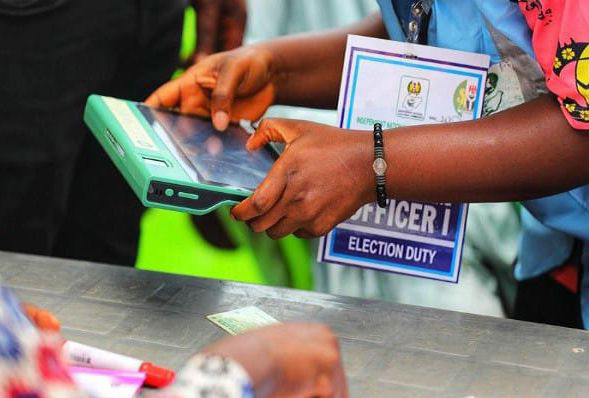
The Independent National Electoral Commission has firmly dismissed swirling allegations of ghost and hired voters in the Osun State governorship election, declaring that the deployment of Bimodal Voter Accreditation System technology has rendered such electoral fraud impossible and that the era of phantom voters in Nigeria's elections is finally over. The commission's robust defence came in response to growing concerns over the integrity of the electoral process, particularly following a brazen attack on a Permanent Voter Card collection centre in Okuku, Osun State, where suspected hoodlums carted away electoral materials, including BVAS devices and PVCs.
Speaking on behalf of the INEC Chairman, the Chief Press Secretary, Mr Dayo Oketola, emphasised that the theft of PVCs would amount to an exercise in futility, given the strict biometric verification required by BVAS technology. “Nobody can use another person’s PVC to vote in an election in Nigeria again. The era of ghost voters is gone. With BVAS, you must tender your PVC and undergo biometric authentication. The technology has been tightened in such a manner that nobody can use another person’s identity to vote any longer in Nigeria,” Oketola declared. He cited previous elections conducted under the leadership of INEC Chairman Prof. Amupitan as proof that the system had already proven its effectiveness in blocking fraudulent voting.
The commission disclosed that a total of 4,427 BVAS devices had been configured for the Osun State governorship election, including 664 backup units strategically positioned to cater for any incidents before and during the election. Additionally, 97 Super Registration Area Centres and 105 Registration Area Centres were established across all local government areas in the state, fully activated the night before election day to ensure seamless accreditation. This robust infrastructure was designed to guarantee that no technical failure or criminal disruption could compromise the integrity of the voting process.
Despite the attack on the PVC collection centre at Oyinlola DC School, Ward 2, Okuku, where staff were assaulted and electoral materials stolen, INEC remained resolute. Oketola assured that whatever was carted away would be replaced, and the incident would not distract the commission from conducting a free, fair and credible election. “Out of the 4,427 BVAS, we have 664 prepared as backups. There is no way whatever happened can disrupt our plans for the election,” he affirmed. The incident was formally reported to the police, and an investigation was immediately launched, with the commission expressing confidence that the authorities would apprehend the suspects and recover the stolen assets.
The dismissal of ghost voter claims was further reinforced by election observer groups. Yiaga Africa, a prominent civil society organisation, confirmed that the official results of the 2026 Osun State governorship election accurately reflected the ballots counted at polling units, validating the integrity of the electoral process. Economist and founder of ANAP, Atedo Peterside, also weighed in, noting that the 43.4 per cent voter turnout recorded in the election was high by recent Nigerian standards and demonstrated that strong voter participation remained the most effective safeguard against rigging.
However, the election was not without its challenges. Reports of vote-buying, BVAS glitches, and isolated incidents of violence emerged from various polling units across the state. The Centre for Democracy and Development (CDD-West Africa) reported operational issues with BVAS, including slow processing and biometric verification problems in Irepodun, Ejigbo, Obokun, Osogbo, Olorunda, Ola Oluwa, Ede North, and Ede South LGAs. Observers also flagged concerns over the solicitation of votes around polling stations in Ilesa East and Ola Oluwa, while media reports alleged vote-buying involving agents of the APC and Accord parties in Irewole LGA.
INEC also cancelled results from at least two polling units in Ife Central Local Government Area after observers reported over-voting during collation. The final result announced at the Ife Central LGA collation centre showed that 39,330 votes were cast from 39,990 accredited voters, with the Accord Party emerging as the leading party in the LGA with 21,171 votes against the APC's 15,913. Despite these isolated irregularities, INEC maintained that the overall integrity of the election remained intact, with the BVAS technology effectively preventing the kind of large-scale manipulation that had characterised previous elections.
The commission's firm stance on the ghost voter allegations has been widely welcomed by civil society organisations and political stakeholders, who see it as a critical step towards restoring public confidence in Nigeria's electoral system. As the country prepares for the 2027 general elections, the Osun experience has demonstrated that technology-driven reforms, when properly implemented, can significantly reduce the opportunities for electoral fraud. However, the persistence of vote-buying and other forms of voter inducement remains a challenge that requires sustained enforcement and public awareness.
For the people of Osun State, the message from INEC is clear: the era of ghost voters is over, and the will of the people, expressed through the ballot, will prevail. As Governor Ademola Adeleke of the Accord Party was declared the winner of the election, the commission's commitment to transparency and accountability has set a new standard for electoral integrity in Nigeria. The question now is whether this momentum can be sustained and replicated across the country in the lead-up to the 2027 general elections.
📩 Stone Reporters News | 🌍 stonereportersnews.com
✉️ info@stonereportersnews.com | 📘 Facebook: Stone Reporters News | 🐦 X (Twitter): @StoneReportNew | 📸 Instagram: @stonereportersnews
Add comment
Comments