

Reported by: Ijeoma G | Edited by: Oravbiere Osayomore Promise.
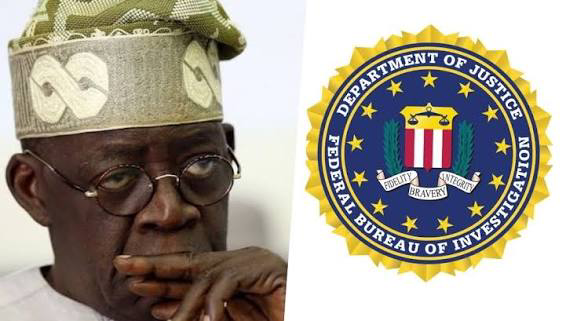
The United States District Court for the District of Columbia has granted the Federal Bureau of Investigation permission to submit sensitive law enforcement records linked to President Bola Ahmed Tinubu directly to the court for private judicial review, marking a significant development in a long-running legal battle over decades-old allegations of drug trafficking. Judge Beryl A. Howell, who is presiding over the case, approved the FBI's request on Friday, August 21, 2026, to provide documents for an in-camera review, meaning the judge will examine the material privately rather than allowing the parties or the public to see the sensitive portions. The FBI had asked the court for permission to file an ex parte and in-camera declaration in support of its renewed motion for summary judgment, arguing that a public explanation would risk revealing the very information it is seeking to protect.
The request, filed on August 20, 2026, before the US District Court for the District of Columbia, stems from a dispute over records requested by American transparency activist Aaron Greenspan, founder of PlainSite. Greenspan has been seeking access to records held by the FBI, Drug Enforcement Administration and other US agencies through Freedom of Information Act requests submitted between 2022 and 2023. One of the requests seeks the "entire FBI file" concerning Tinubu, while another seeks FBI Form 302 interview records connected to Tinubu and an FBI case covering the period between 1992 and 1993. The controversy has its roots in a Chicago-based investigation from the early 1990s involving allegations of heroin trafficking and related financial activities, which culminated in a 1993 civil forfeiture in which Tinubu surrendered $460,000, though he was never criminally charged.
In its application, the FBI said it could not publicly disclose the full reasons for withholding some of the records because doing so could expose sensitive law-enforcement techniques and procedures. The agency invoked several exemptions under the US Freedom of Information Act, including provisions covering personal privacy, confidential sources, law-enforcement techniques and information that could endanger an individual. The FBI specifically cited FOIA Exemptions 7(E) and 7(F), which respectively protect certain law-enforcement techniques and information whose disclosure could reasonably be expected to endanger an individual's life or physical safety. The agency stated: "The FBI has determined that it cannot provide on the public record the full basis for the application of Exemptions 7(E) and 7(F) to certain withholdings and that, therefore, an ex parte, under seal declaration is necessary".
The FBI's filing followed years of resistance by US agencies to Greenspan's efforts to obtain the records. At various stages, the agencies issued what is known as a Glomar response, refusing to confirm or deny whether the requested records existed. However, in April 2025, Judge Howell ruled that the FBI and DEA had failed to sufficiently justify their refusal to confirm or deny the existence of records concerning Tinubu, ordering the agencies to lift their Glomar responses. The judge found that the agencies had not demonstrated a sufficient legal basis for concealing whether records concerning Tinubu existed. The latest FBI application comes amid an ongoing dispute over the release of the records, with the Justice Department having sought a 10-day extension to respond to a court order. However, Judge Howell granted only a four-day extension, setting August 21 as the new deadline. Tinubu's lawyers later joined the DOJ's request for more time, but the judge reportedly rejected the longer extension.
According to an update from Washington-based lobbying firm Von Batten-Montague-York, L.C., which was recently hired by former Vice President Atiku Abubakar, the presidential candidate of the African Democratic Congress for the 2027 elections, Judge Howell granted the FBI's request on Friday morning. The firm said the judge has given the FBI, the DEA, the Department of Justice and President Tinubu until August 28, 2026, "and no later," to file their opposition to the release of the records. The firm described the "and no later" language as a sign that the court has reached its limit, adding that the FBI would now have to convince the court why the documents should not be released, including through its private submission of the sensitive material for judicial review.
The firm also made two additional claims in its post: that the FBI has now admitted it holds "highly sensitive drug-trafficking-related information" about President Tinubu, and that seeking private review is standard procedure for protecting informants. The firm repeated an unverified allegation that President Tinubu "ratted out his alleged co-drug traffickers in exchange for immunity," though no US court has found Tinubu to have been an informant, and that allegation has not been confirmed by the FBI or DOJ. The firm also thanked President Donald Trump and White House senior staff for moving the case forward. Tinubu's U.S. counsel has not publicly commented on this latest alleged order. President Tinubu has consistently and firmly denied any involvement in drug trafficking, dismissing the decades-old allegations.
The development is the latest step in a prolonged legal dispute over requests for US government records concerning allegations linked to Tinubu and a Chicago drug investigation dating to the early 1990s. Greenspan submitted 12 FOIA requests to six federal agencies between 2022 and 2023, seeking records involving four individuals, including Tinubu, Lee Andrew Edwards, Mueez Abegboyega Akande and Abiodun Agbele. Five federal agencies responded with Glomar responses, refusing to confirm or deny the existence of records concerning Tinubu. Greenspan challenged the decisions and later sued after the Justice Department's Office of Information Policy upheld the agencies' positions. If the claim is accurate, the in-camera review would allow Judge Howell to privately assess whether the documents are exempt from release under FOIA, particularly exemptions that protect law enforcement sources and methods, before issuing a final order on public disclosure.
📩 Stone Reporters News | 🌍 stonereportersnews.com
✉️ info@stonereportersnews.com | 📘 Facebook: Stone Reporters News | 🐦 X (Twitter): @StoneReportNew | 📸 Instagram: @stonereportersnews
Add comment
Comments