

Reported by: Ijeoma G | Edited by: Oravbiere Osayomore Promise.
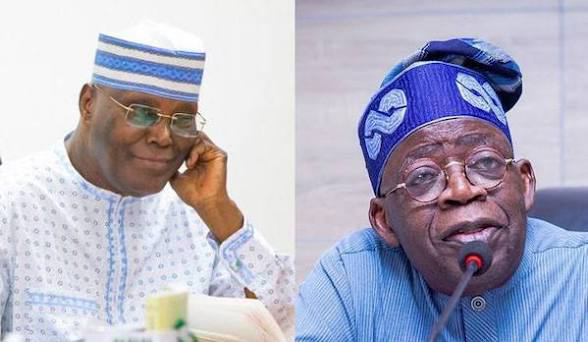
Former Vice President Atiku Abubakar has thrown down the gauntlet, declaring that no amount of opposition from President Bola Tinubu can stop him from restoring a targeted fuel subsidy if he is elected president in 2027. In a statement issued on Sunday, August 23, 2026, by his Senior Special Assistant on Public Communication, Phrank Shaibu, the presidential candidate of the African Democratic Congress made it clear that his proposed intervention would fundamentally differ from the old, opaque subsidy regime. He insisted that the government's own spending records contradict its claim that the fuel subsidy has been completely removed, citing the Nigerian National Petroleum Company Limited's audited accounts which recorded about N4.84 trillion in 2023 and N7.13 trillion in 2024 as "energy-security expenses and related shortfalls".
Atiku argued that these figures prove the government is still absorbing a price differential, even if it now uses different terminology. "Nigerians do not eat semantics. Whether government calls it subsidy, under-recovery, shortfall or energy security, public resources were being used to bridge a gap between economic cost and the price at which petrol was sold," he said. He accused the Tinubu administration of committing "one of the biggest economic frauds" by claiming to have removed the subsidy while quietly extending fiscal concessions and tax credits to oil investors under the Deep Offshore Oil and Gas Projects Incentives framework. "Tinubu stood at Eagle Square and declared that subsidy was gone. Petrol prices exploded, transportation costs soared, food prices followed, businesses buckled, and household purchasing power collapsed," Atiku said.
The former vice president accused the administration of applying different economic standards, providing cushions for wealthy corporations while subjecting ordinary Nigerians to the harsh realities of market forces. "The government can protect a multibillion-dollar oil investment from risk, yet it says protecting the Nigerian worker from crushing hardship is bad economics. It can bend policy to make every barrel of crude more profitable, but tells a struggling mother that making the litre of petrol she needs to take her children to school more affordable is irresponsible," he stated. He described this as "classic economic apartheid," where poor Nigerians face market forces while big oil investors enjoy government protection.
Atiku was unequivocal about his resolve, vowing that "even 100 million Tinubus" cannot stop him from implementing his plan. He emphasized that his proposal, the Atiku Economic Recovery Plan (AERP), is not a return to the old, corruption-ridden subsidy regime but a targeted, capped, transparently budgeted, and independently audited intervention with a clearly defined exit mechanism. He said the plan would be accompanied by measures to expand domestic refining, improve mass transportation, increase competition, and restore household purchasing power. "If Tinubu understands the logic of reducing the cost and risk borne by an investor in order to stimulate production, why does he suddenly become economically illiterate when the proposition is to temporarily reduce the crushing burden on Nigerian households?" Atiku questioned.
The ADC candidate also demanded that the Federal Government publish details of tax concessions granted to petroleum companies, including the beneficiaries and the amount of revenue forgone. He maintained that the government cannot demand sacrifices from Nigerians while providing economic relief to large corporations. "A government cannot preach unrestrained market forces to the poor while practising interventionist economics for his rich foreign friends," he declared. He concluded that the true test of economic reform is not how loudly a president announces that "subsidy is gone," but whether citizens are better off, businesses are productive, and household incomes can sustain basic living costs.
The statement has sparked fresh debate over Nigeria's energy policy and the direction of the 2027 presidential campaign. While Atiku's supporters view his proposal as a necessary intervention to ease the burden on struggling families, critics warn that any return to subsidy could reverse economic gains. As the political season intensifies, the battle over the nation's economic future is set to become a defining issue of the election.
📩 Stone Reporters News | 🌍 stonereportersnews.com
✉️ info@stonereportersnews.com | 📘 Facebook: Stone Reporters News | 🐦 X (Twitter): @StoneReportNew | 📸 Instagram: @stonereportersnews
Add comment
Comments