

Reported by: Ijeoma G | Edited by: Oravbiere Osayomore Promise.
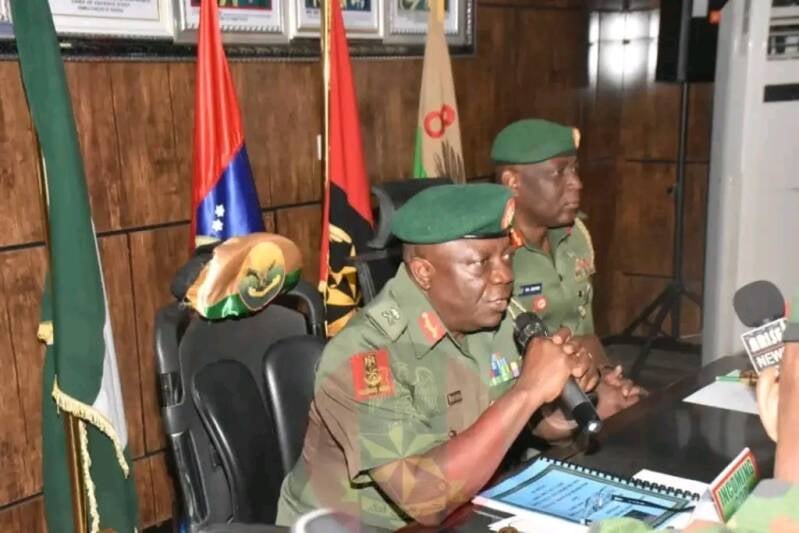
The dust had barely settled on the massacre in Ungushi community when the sound of military vehicles rumbled through the dusty roads of Kebbe Local Government Area. On Sunday, August 16, 2026, Major General Bemgba Paul Koughna, the General Officer Commanding the 8 Division of the Nigerian Army and Commander of Sector 2 of Operation FANSAN YAMMA, arrived in the heart of Sokoto State's most embattled territory to deliver a message that residents have been desperate to hear for months: the army is adjusting its strategy, and it is determined to protect them.
The visit came less than 48 hours after suspected Lakurawa terrorists stormed the Ungushi community, killing at least 32 people, including the Chief Imam of the Ungushi Izala Jumu'at Mosque, Alhaji Aliyu. The attack, which unfolded on Friday evening and continued into Saturday, was one of the deadliest in the region this year. It followed a separate assault on Kebbe town on the same day, where militants killed four soldiers, looted shops, and damaged a hospital. The Lakurawa group, which emerged in northwestern Nigeria between 2016 and 2018 as a community self-defence force before transforming into a violent extremist network, has increasingly become a scourge along the Sokoto-Kebbi border.
Koughna's operational assessment, which included an inspection of the Forward Operating Base in Kebbe and surrounding communities, was aimed at reviewing the army's deployment and preventing further terrorist infiltration. According to a statement issued by the Acting Deputy Director of Army Public Relations for the 8 Division, Lieutenant Colonel Olaniyi Osoba, the GOC met with community leaders and residents to listen to their concerns and assess the security situation firsthand. The visit came amid heightened security concerns along the Sokoto-Kebbi border, with residents reportedly fleeing some affected communities following attacks and livestock rustling.
Addressing the anxious residents, Koughna delivered a message of reassurance that was both firm and empathetic. He assured them that the Nigerian Army had adjusted its security architecture to prevent further infiltration by terrorists and protect vulnerable communities. "Troops remain fully deployed, highly alert and operationally focused on protecting lives and property," he declared. He added that the army had taken measures to ensure that emerging threats were quickly identified and contained before they could escalate. "The Nigerian Army remains unwavering in its determination to respond swiftly and decisively to any emerging threats," he continued.
The GOC further assured the residents that terrorist elements would not be allowed to establish safe havens in Kebbe and its surrounding communities. "We will continue to maintain a robust presence in this area and ensure that our troops remain ready to respond to any threat to the peace and security of the people," he said. His words were a direct response to the fear that had gripped the community in the wake of the Ungushi massacre, where residents had been forced to flee their homes and hide in farms and hills to escape the attackers.
But Koughna's message was not solely about military might. He stressed that effective collaboration between the military and communities was critical to detecting, disrupting and dismantling terrorist networks before they could launch attacks. "Community support remains a critical component in detecting, disrupting and dismantling terrorist networks before they can launch attacks," he said. He urged community leaders and residents to promptly report suspicious movements, unfamiliar persons and other activities that could pose a security threat. He also stressed that effective intelligence-sharing between residents and security agencies remained essential to preventing attacks and denying criminal and terrorist groups freedom of movement.
The GOC's appeal for intelligence cooperation reflects a growing recognition within the military that the fight against terrorism cannot be won by firepower alone. In a region where vast, ungoverned spaces stretch across state borders, the eyes and ears of local communities are often the most effective early warning system. Koughna's call for residents to remain calm and continue with their lawful activities was accompanied by a pledge that security forces were firmly on the ground and working to restore confidence.
The visit comes at a critical juncture in Nigeria's counter-terrorism efforts. The Lakurawa group, which was initially dismissed as a local defence force, has evolved into a transnational threat, with fighters crossing between Nigeria and Niger Republic and establishing camps in the rugged terrain along the border. The group has been linked to a series of attacks, kidnappings and cattle rustling operations that have displaced thousands and crippled local economies. The attack on Ungushi, where the Chief Imam was killed while leading Friday prayers, marked a new low in the group's campaign of terror, demonstrating a willingness to target religious leaders and institutions.
The army's response has been to intensify its presence along the Sokoto-Kebbi border, with troops conducting patrols and establishing forward operating bases in vulnerable areas. The GOC's visit to Kebbe is part of a broader strategy to review and adjust the security architecture in response to emerging threats. The army has also been conducting air strikes on terrorist concentrations in the region, forcing the Lakurawa fighters to flee from their positions.
For the residents of Kebbe and surrounding communities, the GOC's visit was a moment of hope in the midst of despair. The attack on Ungushi had left deep wounds, with families mourning the loss of loved ones and others still searching for missing relatives. The killing of Imam Aliyu, a respected figure who had devoted his life to serving his community, was a particular blow. The GOC's assurance that the army had adjusted its security architecture and that troops were ready to respond to threats offered a glimmer of hope that the cycle of violence might finally be broken.
Koughna also reiterated the commitment of troops to protecting lives, property and critical infrastructure in Kebbe and other vulnerable communities. "We will not allow criminal elements to intimidate our people or disrupt their livelihoods. Our troops are prepared and will continue to operate with determination and professionalism," he said.
As the GOC's convoy departed Kebbe, the residents were left with a renewed sense of hope – and a weighty responsibility. The army has pledged to protect them, but the success of that mission depends, in no small part, on their willingness to share information and work alongside security forces. In the battle against the Lakurawa terrorists, the final victory will be won not only on the battlefield but also in the hearts and minds of the communities that refuse to be broken.
📩 Stone Reporters News | 🌍 stonereportersnews.com
✉️ info@stonereportersnews.com | 📘 Facebook: Stone Reporters News | 🐦 X (Twitter): @StoneReportNew | 📸 Instagram: @stonereportersnews
Add comment
Comments