

Reported by: Oahimire Omone Precious | Edited by: Oravbiere Osayomore Promise.
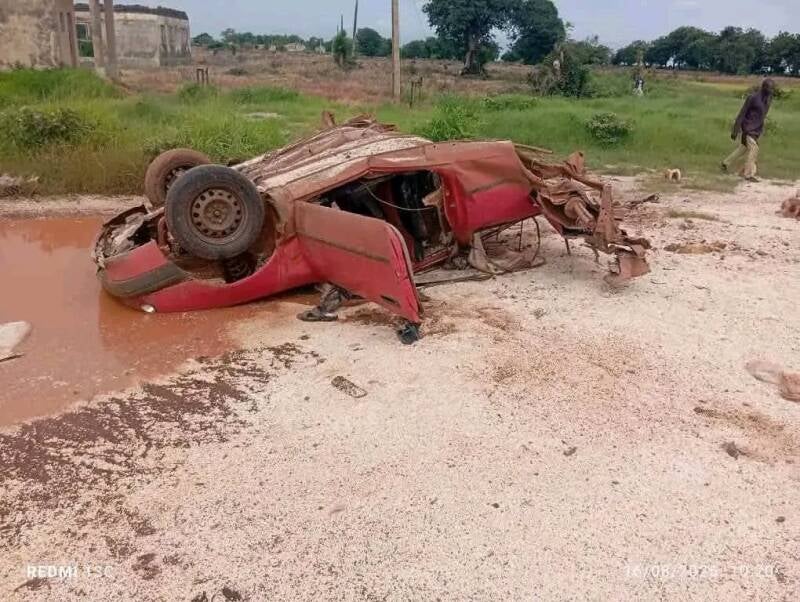
The evening of Saturday, August 15, 2026, was meant to be the end of a routine journey for passengers and traders travelling along the Gwashi–Gurusu road in Bukkuyum Local Government Area of Zamfara State. They were returning from the markets, their vehicle loaded with farm produce and passengers, hopeful of reaching their families before nightfall. Instead, their journey was shattered by a thunderous blast that threw the vehicle off balance, injured three passengers, and sent waves of panic through the community. An Improvised Explosive Device (IED), planted by suspected bandits, had detonated beneath their commercial vehicle, adding to the growing list of communities terrorised by explosives in Nigeria's North-West.
The explosion, which occurred on the evening of August 15, 2026, is the latest in a disturbing pattern of IED attacks targeting civilians and security forces across Zamfara and neighbouring Sokoto states. According to a report by Ripples Nigeria, several travellers sustained severe injuries when the device, allegedly planted by criminal bandits, detonated on the Gurusu-Gwashi road. The blast threw the vehicle off balance, triggering panic among commuters and residents in the area. The vehicle, which was carrying passengers and farm produce, became the latest victim of a tactic that is rapidly transforming the region's roads into death traps.
The attack on the Gwashi–Gurusu road is not an isolated incident. In recent months, the use of IEDs by bandits has escalated dramatically across Zamfara and Sokoto states. On August 12, the Zamfara State Police Command confirmed that its Explosive Ordnance Disposal (EOD) team had cleared a suspected landmine IED along the same Gusau–Gwashi Road in Bukkuyum LGA. Just days earlier, troops of Operation FANSAN YANMA had recovered and cleared a suspected IED along the same corridor. The frequency of these incidents indicates a deliberate and calculated strategy by criminal networks to paralyse movement, disrupt economic activity, and terrorise civilian populations.
The question of where these IEDs are coming from has become a matter of urgent national concern. Security analysts and local sources point to a sophisticated supply chain that funnels explosive materials into the hands of bandit groups. In January 2026, the Zamfara State Police Command intercepted a vehicle and arrested a 38-year-old man with 954 suspected explosive materials believed to be intended for bandits' IEDs. In a separate operation, security guards in Zamfara arrested a driver transporting 98 explosives, N13 million, and motorcycles en route to a bandit stronghold. These seizures suggest that bandits are acquiring explosives through a network of suppliers who transport the materials in commercial vehicles, often concealed in polyethylene bags and other deceptive packaging.
Beyond the supply chain, experts have noted that bandits are increasingly adapting their tactics by exploiting public infrastructure. A Newswatch report revealed that terrorist groups operating in Nigeria's North-East and North-West are dismantling parts of solar-powered street lighting systems, including batteries and electrical components, to repurpose them for IEDs. This innovation reflects a growing technical sophistication that is making it easier for bandits to manufacture and deploy explosive devices with devastating effect.
The most notorious figure linked to the IED campaign is Bello Turji, a bandit kingpin whose group has been accused of planting explosives across North-West communities to isolate rural areas and target both civilians and security personnel. Residents of Anka Local Government Area in Zamfara told SaharaReporters that the terrorists have buried explosive devices along the Bagega-Anka road, effectively cutting off several communities and disrupting farming, trade, and access to healthcare. In Sokoto State, residents raised the alarm after suspected members of Turji's gang allegedly planted an IED along the road leading to Kurawa community in Sabon Birni LGA, strategically buried to target security personnel expected to respond to attacks on nearby communities.
The growing use of explosives marks a dangerous shift in the operational tactics of terrorist groups operating across the North-West. Residents have called on the Nigerian government and the military to urgently deploy specialised explosive ordnance disposal teams alongside ground troops to clear affected roads before more lives are lost. "We need more than ordinary patrols now," one community leader told SaharaReporters. "The roads themselves have become weapons. Government must act immediately before more innocent people or security personnel are killed."
For the three passengers injured in the Gwashi–Gurusu road explosion, the nightmare is far from over. They now face a long and uncertain recovery, haunted by the knowledge that the road they travelled was not just a highway but a battlefield. Their families are left to wonder how many more journeys must end in tragedy before the government takes decisive action to dismantle the networks that supply bandits with the tools of terror. The question is no longer whether bandits are using IEDs – it is who is arming them, and how long the nation will allow this deadly trade to continue.
📩 Stone Reporters News | 🌍 stonereportersnews.com
✉️ info@stonereportersnews.com | 📘 Facebook: Stone Reporters News | 🐦 X (Twitter): @StoneReportNew | 📸 Instagram: @stonereportersnews
Add comment
Comments