

Reported by: Ijeoma G | Edited by: Oravbiere Osayomore Promise.
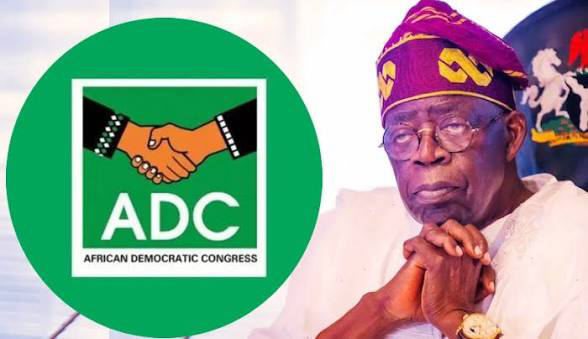
The African Democratic Congress has launched a fierce counter-offensive against the Presidency, rejecting its claim that the party's presidential candidate, Atiku Abubakar's proposed fuel subsidy plan would cost Nigeria N19.1 trillion annually. The ADC, in a statement on Monday, August 31, 2026, by its National Publicity Secretary, Mallam Bolaji Abdullahi, described the figure as a "phantom" calculation designed to discredit Atiku's proposal to bring petrol prices down to about N600 per litre through what it called a controlled domestic-refining subsidy.
The party accused the Presidency of building its case around a hypothetical $40-per-barrel subsidy and attacking a model that Atiku did not propose. Abdullahi stated that the ADC does not concede that implementing the Atiku Economic Recovery Plan would cost N19.1 trillion annually "because it does not". He accused the Presidency of constructing a subsidy model that Atiku did not propose and subsequently attacking it as though it were the former vice president's policy. "That is a classic straw man argument, the Presidency attacking the model it created by itself and passing it off as an attack on the opponent's position. That is dubious," he said.
According to the ADC, Atiku's proposal is not a return to the old, corruption-ridden subsidy regime that relied heavily on imported refined petroleum products. Instead, it proposes a controlled, production-linked incentive for crude feedstock supplied to qualifying domestic refineries. Under the proposed model, the government would establish a benchmark crude price linked to a targeted maximum domestic petroleum-product price. Where the international crude price remains at or below the benchmark, there would be no subsidy. Where it rises above the benchmark, the government would intervene only on the qualifying difference, subject to a predetermined fiscal ceiling.
The party argued that the key distinction between Atiku's proposal and the old subsidy system is the object of the intervention. While the former system was based largely on subsidising imported finished petroleum products, the ADC said Atiku's proposal would support domestic production by making crude feedstock available to Nigerian refineries under controlled conditions. The ADC summarised the difference as moving from an import-dependent model—importing refined products and subsidising their consumption—to one in which Nigerian crude would be refined domestically for local consumption, with surplus products potentially exported.
The ADC also turned the Presidency's fiscal argument around, asking the Federal Government to explain what Nigerians are currently getting in return for the large sums committed to the petroleum sector. The party cited NNPC's audited 2024 accounts, which it said recorded approximately N7.13 trillion under "Energy Security," while broader petroleum-related expenditures and receivables could amount to roughly N17.5 trillion depending on the accounting categories included. The ADC stressed that it was not claiming these figures represented conventional petrol subsidy costs but demanded greater transparency over the expenditure.
The party further accused the government of double standards in its approach to fiscal incentives. Abdullahi pointed to President Tinubu's Deep Offshore Oil and Gas Projects Incentives (Tax Remission) Order 2026, which provides production tax credits that can rise to $11.50 per barrel for qualifying oil projects. He questioned why incentives for oil investors were defensible while an intervention designed to make fuel cheaper for Nigerians was condemned. "If Nigeria can provide a production-linked fiscal incentive of up to $11.50 per barrel to stimulate offshore oil production, why is a carefully controlled crude-input incentive for domestic refineries dismissed as economic madness when its objective is to make fuel cheaper for Nigerians and build domestic refining capacity?" Abdullahi asked.
The ADC argued that the debate over petrol subsidy should not be reduced to the question of whether motorists benefit, noting that fuel prices have economy-wide consequences, affecting transportation, food distribution, agriculture, manufacturing, and the cost of living. The party stated that the real debate was what Nigeria should subsidise, why it should do so and who should benefit, insisting that its proposal was a capped, audited and traceable production-support regime aimed at making fuel cheaper while strengthening domestic refining.
The Presidency had earlier claimed that Atiku's proposed petrol subsidy policy could cost Nigeria N19.1 trillion annually. According to a presidential aide, the estimate was based on a crude oil price of $80 per barrel and an estimated subsidy requirement of about $40 per barrel. However, the ADC has rejected this figure, challenging the government to prove its claim and accusing it of "fiscal scare-mongering" instead of addressing the hardship caused by the removal of petrol subsidy.
📩 Stone Reporters News | 🌍 stonereportersnews.com
✉️ info@stonereportersnews.com | 📘 Facebook: Stone Reporters News | 🐦 X (Twitter): @StoneReportNew | 📸 Instagram: @stonereportersnews
Add comment
Comments