

Reported by: Ijeoma G | Edited by: Gabriel Osa
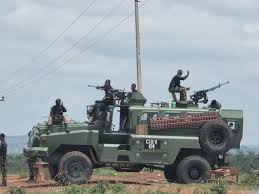
In the early hours of Friday morning, Nigerian security forces successfully repelled a large-scale assault by Islamic State West Africa Province (ISWAP) militants on military positions in Chibok, Borno State, marking one of the most intense engagements in the area in recent months. The attack, which began around 3:00 a.m. on November 29, 2025, saw more than 300 insurgents—many believed to be operating jointly with Boko Haram elements—launch a coordinated offensive on troops under the 28 Task Force Brigade of Operation Hadin Kai.
According to security sources, the insurgents approached the Chibok perimeter in multiple waves, attempting to overwhelm defensive positions with heavy gunfire and explosive volleys. Their movement, traced back to forested hideouts along the Sambisa axis, suggested a well-planned operation aimed at breaching military fortifications and creating a symbolic show of force in a region long targeted by extremist groups. Despite the scale of the attack, Nigerian troops held their ground, engaging the militants in a fierce firefight that lasted roughly two hours. The soldiers, supported by reinforcements positioned within the brigade’s operational radius, prevented the attackers from infiltrating any military installation or civilian community.
As the insurgents began to retreat toward the Timbuktu Triangle—a cluster of forested camps long used as staging points for ISWAP operations—the Nigerian Air Force launched a rapid and coordinated counter-strike. Four manned aircraft conducted targeted bombardments along the militants’ withdrawal axis, followed by precision drone strikes that tracked and hit fleeing clusters of fighters. These aerial operations, conducted in close coordination with ground intelligence, significantly disrupted the insurgents’ movement and reportedly inflicted heavy losses among their ranks. Although exact casualty figures have not yet been released, surveillance feedback indicated scattered combatant movement and loss of cohesion among the retreating forces.
Remarkably, there were no reported casualties or equipment losses on the Nigerian military side. Civilian communities around Chibok also remained unharmed, a relief for residents who have endured years of attacks, abductions, and threats from extremist groups. Locals described hearing hours of sustained gunfire but noted that the fighting remained contained to the outskirts due to the military’s firm defensive posture.
The attempted assault is seen by analysts as part of ISWAP’s ongoing effort to reassert influence in southern Borno and test the resilience of Nigerian forces. However, the failure of such a large contingent to break through military lines is being described as a significant setback for the insurgents. The responsiveness of the Air Force and the coordinated communication between ground units and air assets further underscored the evolving tactical effectiveness of Operation Hadin Kai.
By morning, calm had largely returned to Chibok, though security presence remained heightened, with troops conducting mop-up operations and surveillance flights continuing over suspected escape routes. Residents expressed both anxiety and gratitude, acknowledging the scale of the threat but relieved that the military’s quick action prevented what could have been a devastating incursion.
📩 Stone Reporters News | 🌍 stonereportersnews.com
✉️ info@stonereportersnews.com | 📘 Facebook: Stone Reporters | 🐦 X (Twitter): @StoneReportNew | 📸 Instagram: @stonereportersnews
Add comment
Comments